2026: The Year AI Stops Asking and Starts Doing

Forget chatbots. This year, AI becomes your most reliable employee — if you're ready.
In Part 1, I covered what 2025 actually delivered for small businesses. Now let's talk about what's coming because 2026 isn't going to be a bigger version of 2025. It's going to be fundamentally different.
The shift can be summarized in one sentence: AI is moving from reactive to proactive.
Last year, you asked AI questions and it answered. This year, AI will anticipate what you need and handle it before you ask.
The Agentic AI Era Is Here
If there's one term you'll hear constantly in 2026, it's "agentic AI." Gartner predicts 40% of enterprise applications will integrate task-specific AI agents by year's end, up from less than 5% in 2025. That's not incremental growth. That's a fundamental shift.
What makes AI "agentic"? Three things:
It understands goals, not just commands. Instead of responding to individual prompts, agentic AI grasps your broader objectives and figures out how to achieve them.
It interacts with tools and systems. These agents can query databases, update your CRM, book meetings, send follow-ups, and monitor results, all without you touching your keyboard.
It adapts and self-improves. When something doesn't work, it adjusts its approach and tries again.
For SMB owners, this means AI that doesn't just answer your questions about customer service it actually handles customer service. Not AI that helps you think through scheduling but AI that manages your calendar.
Five Predictions That Will Shape Your Business
1. AI Prompts You (Not the Other Way Around)
We're entering the era of proactive AI. These systems will sit in your workflows your Slack, your email, your calendar gathering context and anticipating what you need before you ask.
ChatGPT's recent "Pulse" feature was an early glimpse. By mid-2026, expect your AI tools to surface insights like "Your top customer hasn't ordered in 6 weeks here's a drafted check-in email" without being prompted.
2. Voice AI Becomes Standard for Service Businesses
The conversational AI market is projected to grow from $7.6 billion in 2025 to $139 billion by 2033. Healthcare organizations report 70% operational improvements from voice AI. Service businesses are seeing 40-50% reductions in call handling costs.
If you run a business where phones matter and most SMBs do, AI Voice Agents aren't a "nice to have" anymore. They're how your competitors will capture the leads you're missing at 7 PM on a Tuesday.
3. AI Models Become Commodities
Here's a counterintuitive prediction from IBM: the model itself won't be the differentiator in 2026. GPT-5.2, Gemini 3, Claude 4.5 they're all remarkably capable. The real value will come from how you orchestrate these tools into your specific workflows.
This is actually great news for SMBs. You don't need to pick a winner or bet on a specific vendor. You need to focus on understanding your processes and where AI fits.
4. Context Engineering Replaces Prompting
The skill of 2025 was writing good prompts. The skill of 2026 is context engineering giving AI the right information, at the right time, in the right way.
Memory features (like those in ChatGPT and Claude) are just the beginning. This year, we'll see dramatic expansion of context windows potentially 10x what they are today. That means AI can hold entire projects, customer histories, and operational playbooks in working memory.
5. Multi-Agent Systems Go Mainstream
The most interesting development? AI agents that work together. Imagine a team of specialized agents one handling lead qualification, another managing scheduling, a third monitoring customer satisfaction all coordinating without human intervention.
Salesforce calls this the "Agentic Enterprise." For SMBs, it's the ultimate force multiplier.
What This Means for You (Practically)
If these predictions feel overwhelming, here's how I'd prioritize:
Start with one workflow. Don't try to transform everything. Pick your biggest bottleneck — missed calls, slow follow-ups, scheduling chaos and solve that first. As I've always said, stop overthinking and start somewhere.
Focus on outcomes, not technology. The question isn't "Should I use GPT or Claude?" The question is "What specific result do I want, and what's the fastest path to get there?"
Build your context systems now. Start documenting your processes, your customer personas, your brand voice. The businesses that have this context organized will deploy AI agents faster and more effectively.
Budget for experimentation. The Revenued 2025 SMB Report found that 68% of owners experienced at least one moment when they feared their business might not survive. The ones who emerged stronger? They adapted through volatility rather than waiting for perfect conditions.
The Real Opportunity
Here's what excites me most about 2026: the gap is closing.
For decades, small businesses couldn't afford the operational advantages that large corporations had: massive call centers, dedicated data teams, round-the-clock customer service. AI erases those advantages.
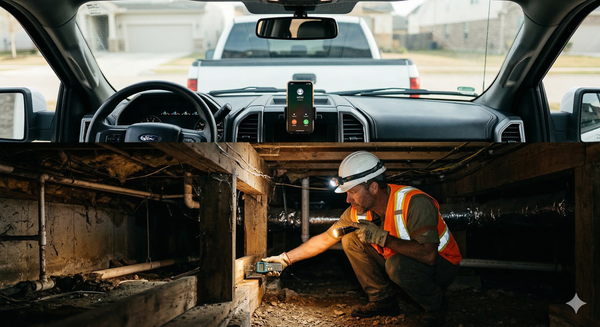
A plumber in The Woodlands can now have better lead qualification than a regional chain. A medical practice can offer more responsive patient communication than a hospital system. A professional services firm can deliver faster research than a big consulting company.
The tools are ready. The costs have dropped. The question is whether you're ready to use them.
If you're wondering where to start, that's exactly what we help with at Outcome Orbit AI. Let's turn AI complexity into measurable results for your business.
Growth, Automated.